
Most software vendors are built around a single moment: the handoff. The demo passes. The invoice clears. The repository changes hands. Then the team moves to the next contract, and whatever happens to the system three months later — the slow query, the failed deploy, the permission that leaks data across departments — becomes your problem alone.
If you have bought software before, you know this pattern. You have probably paid for it twice: once to the vendor who shipped it, and again to whoever you hired to keep it running after they disappeared.
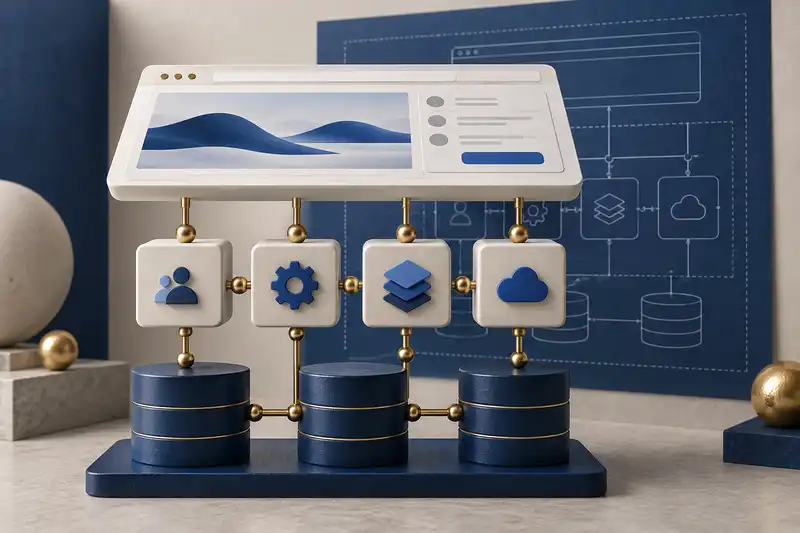
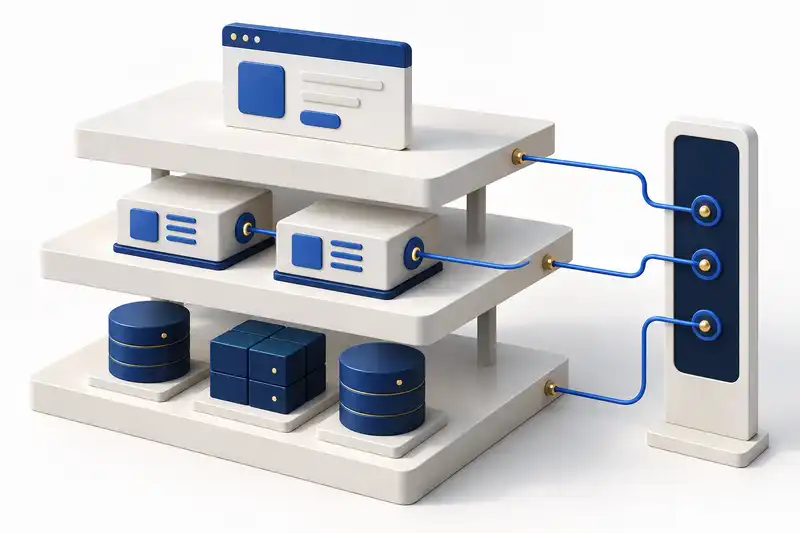
We built Digital Cubic to work the other way. We build tailored systems for clients, and we also build and operate our own product stack in production: the Arkan suite (ArkanCS for construction management, ArkanERP for project-driven ERP, and ArkanPM for property operations), Vloud (our SaaS hosting and operations platform, which also hosts client systems), and ErrorLens (our SaaS product for AI-assisted debugging and monitoring). These are not a portfolio we point at. They are systems we are on the hook for every day, with real users who notice the moment something breaks.
That distinction is the whole argument.
Shipping is an event. Operating is a discipline.
A vendor who only ships code never feels the cost of the decisions they made. They never get paged when the deployment they wrote fails at midnight. They never watch a "small" schema shortcut turn into a six-month migration. They never sit with a support queue that traces straight back to an architecture choice made to hit a deadline.
Because they never feel that cost, they never design against it. The incentive stops at delivery.
When you operate your own software, the incentive runs the other way. Every corner you cut comes back to you, so you stop cutting them. That is not a moral position. It is what running production teaches you whether you want the lesson or not.
What running Arkan, Vloud, and ErrorLens taught us
The lessons are specific, not slogans. Here is what each product forced us to get right.
Deployment you can repeat and reverse
Operating Vloud means we deploy and host software for real environments, not just push to a demo server. That forces repeatable builds, controlled releases, a rollback path, and environment parity — so "it worked on my machine" stops being an acceptable answer. When we tell a client we will host and operate their system, the sentence carries weight. We already run our own stack this way.
Observability, in place before something breaks
ErrorLens exists because we needed to see inside our own systems in production. The value of monitoring is not the dashboard you watch when things are calm. It is the trail you already captured when something fails at 2 a.m. and you need to know what changed, where, and for whom — without waking a user to ask. Systems that were never instrumented go silent exactly when you need them to talk. So we build instrumentation in from the start, in our products and in yours.
Access control that survives the real org chart
Arkan runs across site teams, project offices, finance, procurement, and management — people who must see different things and approve different things. Permissions that look tidy in a design document get tested the moment a real organisation uses them. Operating Arkan taught us to treat roles, approvals, and visibility as first-class parts of the architecture, not a settings screen bolted on late.
Systems built to keep changing
A system you operate for years is never finished. Requirements shift, teams grow, and the code has to absorb that without a rewrite every time. Living with our own products, release after release, is what taught us to build for maintainability: clean boundaries, documented data models, and change that ships in controlled modules instead of one fragile launch.
What this changes when we build for you
None of this is theory we picked up at a conference. It is the daily reality of keeping our own software alive, and it flows straight into client work.
When we architect your system, we design against the failure cases we have actually met. When we say we will deploy, host, and monitor what we build, we are describing our normal operating posture, not a service invented for your invoice. When we hand a system over, it arrives with the instrumentation, access control, and deployment discipline that let it be operated — by us or by your team — long after launch.
A demo proves someone can write code. Operating it every day proves they can be trusted with yours.
We are not going to pretend nothing ever breaks. Software breaks. The honest difference is whether the people who built it are still there, still accountable, and already equipped to see the failure and fix it — or three clients down the road and unreachable.
We chose to be the first kind. Our own products are the proof, and they are the reason we can stand behind yours.